May 4, 2026 • Mara Voss • 9 min reading time • Prices verified June 5, 2026
Premium Tungsten Bands $100–$400: What Thorsten and Gentlemen's Bands Actually Deliver
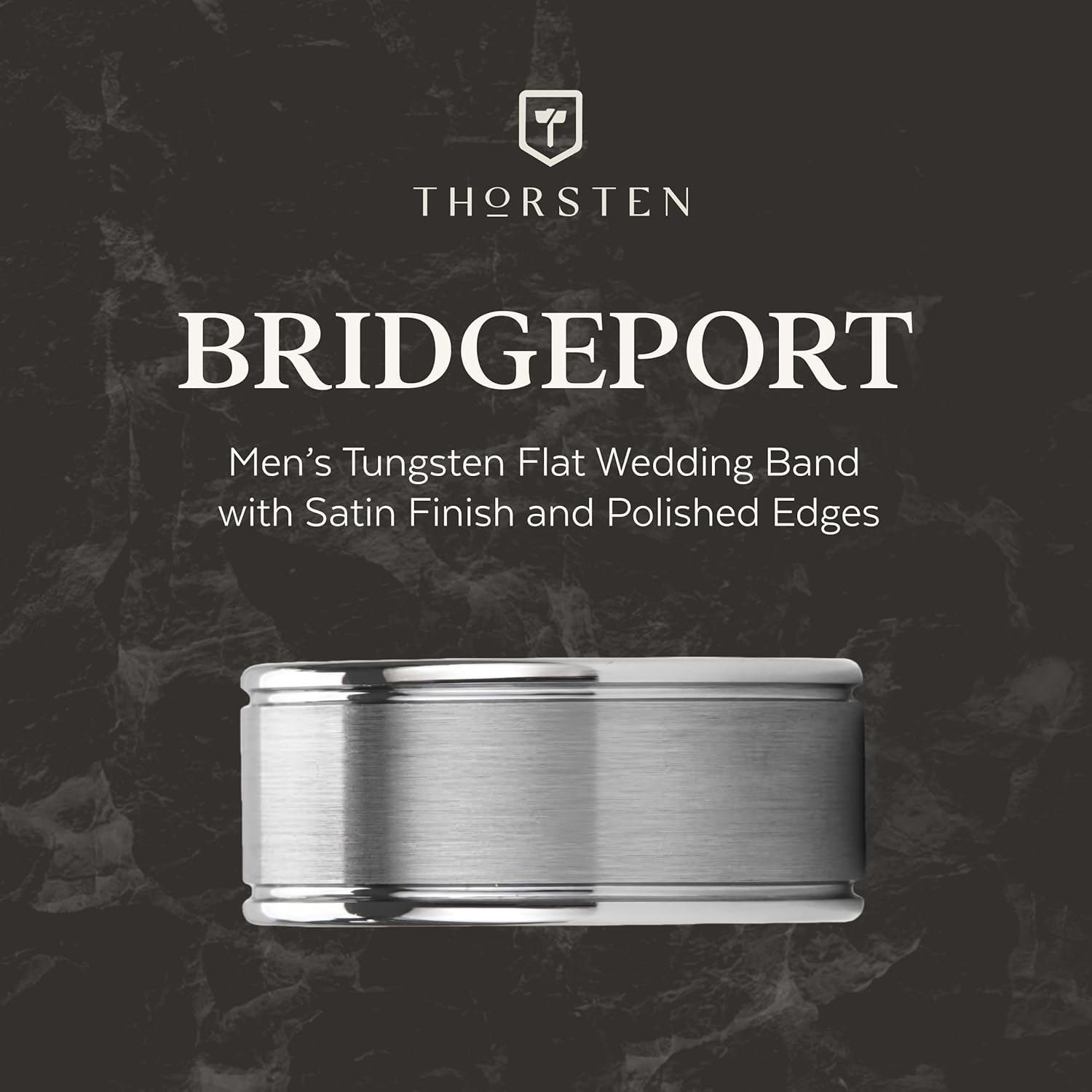
Tungsten carbide is the metal that refuses to apologize for being practical. It’s one of the hardest materials used in wedding jewelry — meaning it resists the everyday scratches that dull softer metals like gold or sterling silver — and it sits at roughly a 9 on the Mohs scale (a standard measure of a material’s scratch resistance, where diamond is a 10 and your fingernail is about a 2.5). That hardness is the whole pitch: a tungsten carbide band can look polished and new five years after you buy it, even if you work with your hands every day. The tradeoff, which we’ll get into in detail, is that tungsten doesn’t bend — it fractures under extreme lateral force, which matters more than most people realize before they buy.
This guide focuses specifically on the $100–$400 range, where Thorsten Rings and Gentlemen’s Bands are two of the most visible specialty players. If you’re already past the budget tier ($20–$80 mass-market tungsten from Amazon or big-box stores) and wondering whether spending two to four times more actually buys you something real, this is the comparison you need. We’ll break down materials, craftsmanship differences, warranty terms, inlay options, and the decision logic for matching sets — with numbers where numbers help.
| EDITOR'S PICK[LIAM Flat Black Satin Finished](https://www.amazon.com/dp/B0BJ6BTN4T?tag=greenflower20-20)… | Mid-tier[MAYBACH Light Gray Carbon Fiber](https://www.amazon.com/dp/B0CCFPST6T?tag=greenflower20-20)… | Budget pickMen's Black Tungsten Carbide We… | |
|---|---|---|---|
| Material | Tungsten Carbide | Carbon Fiber Titanium | Tungsten Carbide |
| Width | 8mm | 8mm | — |
| Finish | Satin | Polished Beveled | Beveled |
| Inlaid Diamonds | ✓ | ✓ | ✗ |
| Accessories | — | — | ✓ |
| Price | $399.99 | $389.99 | $119.95 |
| See on Amazon → | See on Amazon → | See on Amazon → |
What “Premium Tungsten” Actually Means at This Price Point
Not all tungsten carbide is equal, and the gap between a $25 Amazon band and a $200 Thorsten piece isn’t purely margin. The key variable is binder composition — tungsten carbide powder must be bonded with a secondary material to form a wearable ring, and the two dominant binders are nickel and cobalt.
Cobalt binder is the industry standard for jewelry-grade tungsten carbide. Nickel binder is cheaper to produce and more common in budget-tier pieces. The practical difference: cobalt-bonded rings are generally considered more biocompatible and less likely to cause skin reactions in people with sensitivities, though it’s worth noting that individual reactions vary. Per Brides.com’s overview of tungsten wedding bands, jewelry-grade cobalt-bonded tungsten carbide is the formulation recommended by most specialty jewelers for daily-wear rings.
Both Thorsten and Gentlemen’s Bands publish that their bands use jewelry-grade, cobalt-bonded tungsten carbide. That’s table stakes in this tier — but confirming it matters if you’re comparing against a mid-range retailer that doesn’t specify binder composition.
Weight and comfort fit. Tungsten carbide is roughly 1.7 times denser than gold by volume, which means it has a substantial, almost satisfying heft. Both brands offer comfort-fit profiles — that’s an industry term for an interior dome shape that sits more naturally on the finger rather than flat against it, which reduces pressure during finger swelling. This is a detail worth asking about in any price tier; budget rings often skip it.
Finish quality. At this tier, you’re paying for hand-applied finishes — polished, brushed, matte, satin — and for inlays (materials set into a channel carved into the band’s surface, like wood, carbon fiber, or meteorite). Spec sheets and aggregated owner reviews suggest that Thorsten in particular has invested in varied surface textures, including beveled edges and stepped profiles, that are hard to source in budget tungsten.
Thorsten Rings: The Design Catalog Argument
Thorsten positions itself as a design house first. Their catalog as of mid-2026 runs well over 200 tungsten SKUs, including a notable range of inlay bands — wood grain, turquoise, meteorite, and carbon fiber (a woven composite material prized for its graphic visual texture) — priced mostly in the $100–$250 range for tungsten. Their higher-end damascus-look tungsten pieces, which use laser etching to replicate the layered pattern of forged Damascus steel, push toward the $300 mark.
What owners report: Across aggregated reviews on The Knot’s vendor profiles and independent jewelry forums, Thorsten buyers consistently highlight the finish consistency — the polish on polished-finish bands holds up, and the inlays sit flush rather than proud of the surface (meaning the inlay material doesn’t create a raised edge that catches on things or peels). Critical reviews cluster around two themes: sizing exchanges take longer than buyers expect (more on warranty below), and the meteorite inlay bands require occasional maintenance to prevent oxidation of the meteorite material itself, which is an inherent property of iron-nickel meteorite regardless of the jeweler.
The inlay trade-off. Meteorite inlay — sourced from Gibeon meteorite, the most common variety used in jewelry — is genuinely eye-catching, and at Thorsten’s $150–$250 price point it’s more accessible than comparable pieces from Lashbrook or Brilliant Earth that run $400+. But meteorite is hygroscopic, meaning it absorbs moisture and can develop surface rust if not kept dry and occasionally treated with oil. Thorsten publishes care instructions for this; buyers who follow them report no problems. Buyers who don’t consistently mention surface spotting within a year. Per JCK Online’s coverage of alternative metal care requirements, meteorite inlay maintenance is a category-wide issue, not a brand-specific one.
Matching sets. Thorsten offers coordinated sets across gender-neutral sizing — meaning you can get the same design in a 4mm width and a 7mm width from the same collection, with the same finish and inlay, without the band being labeled “men’s” or “women’s.” This is a meaningful design decision for couples who want visual coordination without the traditional his-and-hers framing. The Knot’s wedding ring guide notes that coordinated alternative-metal sets have grown significantly as a segment, particularly among couples who want matching symbolism without matching width.
Gentlemen’s Bands: The Customization and Service Argument
Gentlemen’s Bands (gbands.com) operates differently from Thorsten — smaller catalog, more customization emphasis, and a reputation built heavily on made-to-order service responsiveness. Their tungsten range in 2026 sits mostly $80–$300, with custom engraving and a few inlay options pushing toward $350.
Where they differentiate. Owners consistently report faster communication and more flexible exchange policies compared to larger-catalog retailers. Their lifetime sizing exchange policy — which matters for tungsten because tungsten cannot be resized (the material is too hard to cut down or stretch; a new ring must be made) — is consistently praised in review aggregations for its low-friction execution. National Jeweler’s coverage of alternative-metal retailer differentiation identifies warranty and exchange ease as the primary battleground in this tier, and Gentlemen’s Bands’ approach reflects that market reality.
Engraving. Tungsten can be laser-engraved, and Gentlemen’s Bands has built a stronger reputation for engraving execution than Thorsten in aggregated reviews — specifically for interior engraving depth and legibility on the harder material. If a personalized interior inscription is a decision driver for you, this distinction is worth weighing.
The catalog trade-off. Fewer inlay options means if you’re specifically hunting for a meteorite, opal, or exotic wood inlay in a tungsten base, Thorsten’s breadth wins. Gentlemen’s Bands is the better call if you want a cleaner, more restrained design with confident service backup — not if you want to scroll through 40 inlay variations.
By the Numbers
| Factor | Budget Tungsten ($20–$80) | Thorsten ($100–$300) | Gentlemen’s Bands ($80–$350) |
|---|---|---|---|
| Binder type published? | Rarely | Yes (cobalt) | Yes (cobalt) |
| Comfort fit standard? | Inconsistent | Yes | Yes |
| Lifetime exchange policy? | No / unclear | Yes | Yes |
| Inlay options | Minimal | Extensive (20+ materials) | Moderate (8–12 materials) |
| Engraving quality (owner reports) | Variable | Good | Consistently praised |
The Hardness Advantage — And the Failure Mode You Need to Understand
At a Vickers hardness (a precise laboratory measure of indentation resistance, separate from the Mohs scratch scale) of approximately 1,200–1,400 HV, tungsten carbide is dramatically harder than gold (roughly 200 HV) or even cobalt chrome (around 700 HV). Practically: tungsten carbide bands, whether from Thorsten or Gentlemen’s Bands, will not show the fine surface scratches that accumulate on softer metals within months of daily wear. Per National Jeweler’s alternative metals overview, this scratch resistance is the primary reason tungsten carbide has held significant market share among active-lifestyle buyers — surgeons, tradespeople, and athletes — since the early 2010s.
The failure mode is brittle fracture. Tungsten carbide doesn’t deform under pressure the way gold or silver does — it shatters. Drop a tungsten band on a hard floor at the right angle and it can crack. Apply significant lateral pressure (say, a heavy object rolling over your hand) and the ring breaks rather than bending. Jewelers Mutual’s overview of insuring alternative metal jewelry explicitly notes that standard jewelry insurance policies may not cover tungsten carbide breakage under impact, because it’s classified as a material failure rather than accidental damage in many policy frameworks — worth verifying with your insurer.
Both Thorsten and Gentlemen’s Bands include breakage replacement in their lifetime warranty terms. This matters. Budget-tier tungsten warranties often exclude impact breakage or limit replacement to a single occurrence. When you’re paying $150–$300, confirm the warranty explicitly covers accidental breakage before you buy.
Decision Rules: If X, Then Y
If scratch resistance and low maintenance are your primary requirements and you want a clean, polished or brushed look without inlays: either brand serves you well. Gentlemen’s Bands edges ahead on service predictability; Thorsten edges ahead on finish variety.
If you want an inlay band — especially meteorite, opal, or exotic wood — Thorsten’s catalog depth is the practical winner in this tier. Just go in knowing meteorite needs care. If you want meteorite without the maintenance commitment, consider a meteorite-look laser-etched band instead; Thorsten offers these at lower cost.
If interior engraving matters — a date, coordinates, a name — go to Gentlemen’s Bands. Owner reports on engraving execution are more consistent there.
If you’re buying a matching set and want gender-neutral coordinated widths from the same collection, Thorsten’s explicit coordination across their collections makes this easier to execute without defaulting to gendered labels.
If you’re an active-lifestyle buyer — hands in water, heavy tools, daily physical work — verify the lifetime breakage replacement policy in writing before ordering from either brand. Both offer it, but the specific terms (number of replacements, shipping cost responsibility, turnaround time) vary and are worth reading before a $200+ commitment.
If your budget is closer to $80–$120 and you’re deciding between budget-tier tungsten and entry Gentlemen’s Bands: the jump is worth it for the warranty clarity and comfort fit alone. A $90 Gentlemen’s Bands piece with a documented lifetime exchange policy is a meaningfully better long-term proposition than an $85 generic tungsten band with no stated exchange terms — which is essentially the entire argument for staying in the specialty tier.
The premium tungsten market in 2026 is mature enough that both Thorsten and Gentlemen’s Bands have earned their reputations through real differentiation. Neither is a marketing fiction. The choice between them is genuinely a function of what you’re optimizing for — and now you have the framework to make that call cleanly.