May 19, 2026 • Mara Voss • 10 min reading time • Prices verified June 5, 2026
Tungsten Carbide Wedding Bands: The Scratch-Resistance vs. Brittleness Trade-Off, Explained
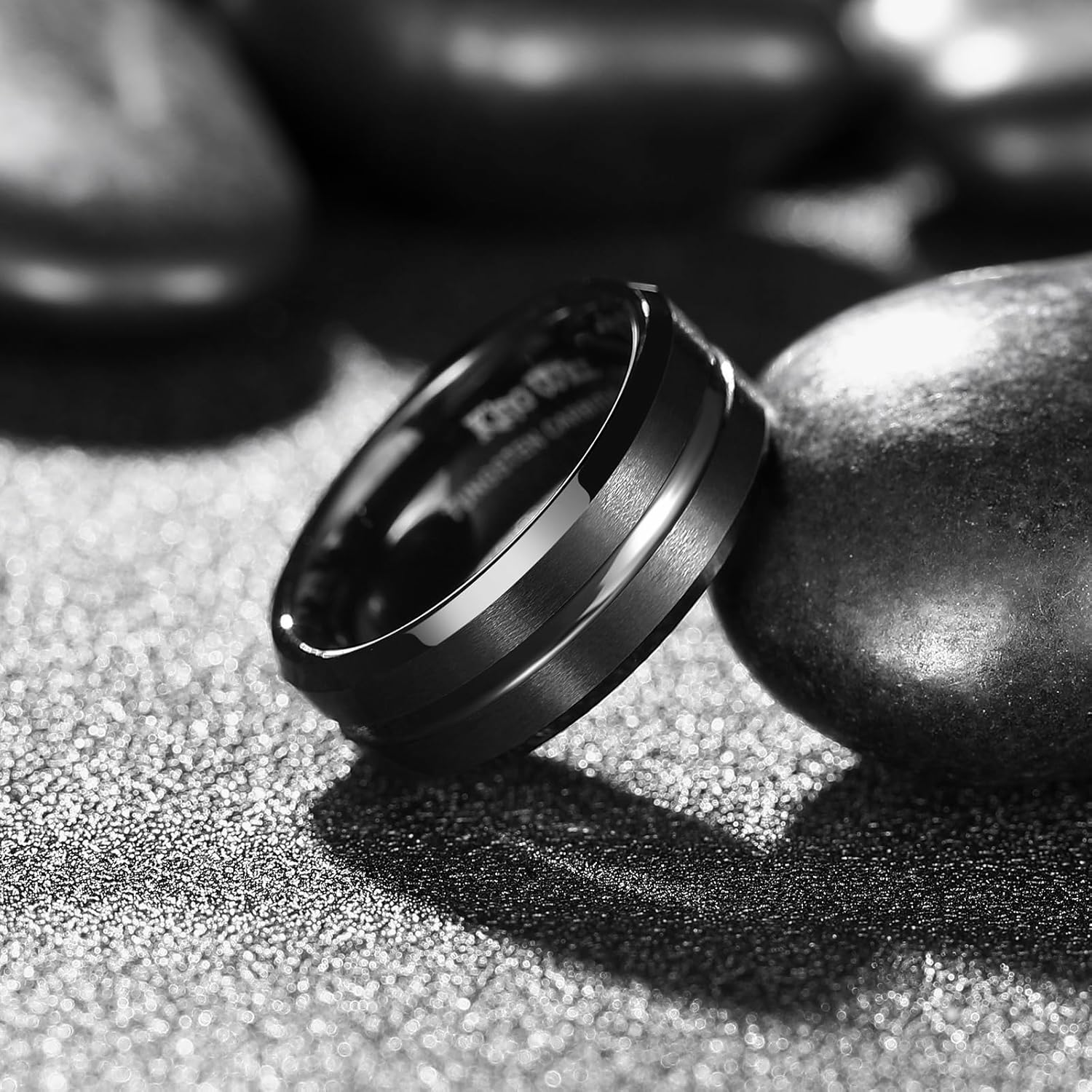
Tungsten carbide is one of those materials that sounds like it belongs in an aerospace parts catalog — and in a sense, it does. Tungsten carbide is a compound made by fusing tungsten metal with carbon atoms, and it is used in industrial cutting tools, drill bits, and armor-piercing ammunition because it is extraordinarily hard. In jewelry terms, hardness means resistance to scratching: the higher the hardness rating, the harder it is to leave a visible mark on the surface. On the Mohs scale — a 1–10 ranking of scratch resistance, where diamond sits at 10 — tungsten carbide rings typically score between 8.5 and 9.5. For comparison, platinum and gold sit around 4–4.5. That difference is not subtle. It is the reason tungsten carbide bands have become the go-to choice for anyone who works with their hands, spends time outdoors, or simply does not want to think about their ring getting dinged up.
But here is the trade-off that every tungsten carbide buyer deserves to understand before committing: that same crystalline hardness that shrugs off scratches also makes tungsten carbide brittle. Under a sharp, concentrated impact — the kind that merely bends a gold ring — a tungsten carbide band can crack or shatter instead. This article walks you through exactly what that means in practice, who it matters to, and how to make a clear-eyed decision about whether tungsten carbide is the right metal for your band.
| EDITOR'S PICK[King Will Tungsten Carbide Wedd…](https://www.amazon.com/dp/B06XYRLNCP?tag=greenflower20-20) | Mid-tier[King Will Tungsten Men's Weddin…](https://www.amazon.com/dp/B074K17F5L?tag=greenflower20-20) | Budget pick[King Will Mens Brushed Wedding…](https://www.amazon.com/dp/B0DHRWVGDJ?tag=greenflower20-20) | |
|---|---|---|---|
| Width options | 4/6/8mm | 6-10mm | 10mm |
| Finish | Matte + Polished | Matte | Matte Step Edges/Pipe Cut |
| Plating | 14K Gold Plated | — | — |
| Size range | 6-14 A-G | — | — |
| Price | $28.99 | $28.99 | $21.49 |
| See on Amazon → | See on Amazon → | See on Amazon → |
The Hardness Advantage: What You Are Actually Buying
When buyers say they want a scratch-resistant ring, they usually mean one of two things: they do not want to look down in six months and see a ring dulled by surface micro-scratches, or they have a specific job or hobby where the ring will take real abuse. Tungsten carbide addresses both concerns better than almost any other wearable metal.
The GIA (Gemological Institute of America), in their published overview Alternative Metals in Jewelry, notes that tungsten carbide’s Vickers hardness — a more precise engineering measure than Mohs — typically falls between 1,400 and 1,800 HV. For reference, hardened stainless steel rings land around 200–400 HV, and cobalt chrome sits around 700–900 HV. That is not a small gap. In practical terms, a tungsten carbide band retains its polished or brushed finish far longer than steel, titanium, or cobalt chrome under comparable daily wear.
JCK Online, in their retailer education piece Tungsten Carbide: What Retailers Need to Know, has noted that tungsten carbide bands routinely arrive at jewelers for routine cleaning looking nearly identical to how they looked when new — an observation gold or platinum buyers would find almost unfamiliar after years of daily wear.
Metal Comparison by Hardness, Resizability, and Price
The table below compares the five metals most commonly considered by wedding band shoppers.
| Metal | Mohs Hardness | Vickers Hardness (HV) | Resizable? | Approx. Price Range |
|---|---|---|---|---|
| Tungsten Carbide | 8.5–9.5 | 1,400–1,800 | No | $30–$400 |
| Cobalt Chrome | 6–7 | 700–900 | Rarely | $80–$350 |
| Stainless Steel | 5.5–6.5 | 200–400 | No | $15–$150 |
| Platinum | 4–4.5 | 400–500 | Yes | $900–$3,000+ |
| 14k Gold | ~3.5 | 150–200 | Yes | $300–$2,000+ |
(Hardness ranges compiled from published manufacturer specifications and GIA reference materials, including the GIA overview Alternative Metals in Jewelry*; price ranges reflect the U.S. market as of May 2026.)*
Comparing Your Three Realistic Options
Buyers who reach the tungsten carbide research stage are almost always choosing among three practical tiers. Each is addressed below.
Budget Tier: Stainless Steel vs. Entry-Level Tungsten Carbide
King
$21.49
In stock on Amazon
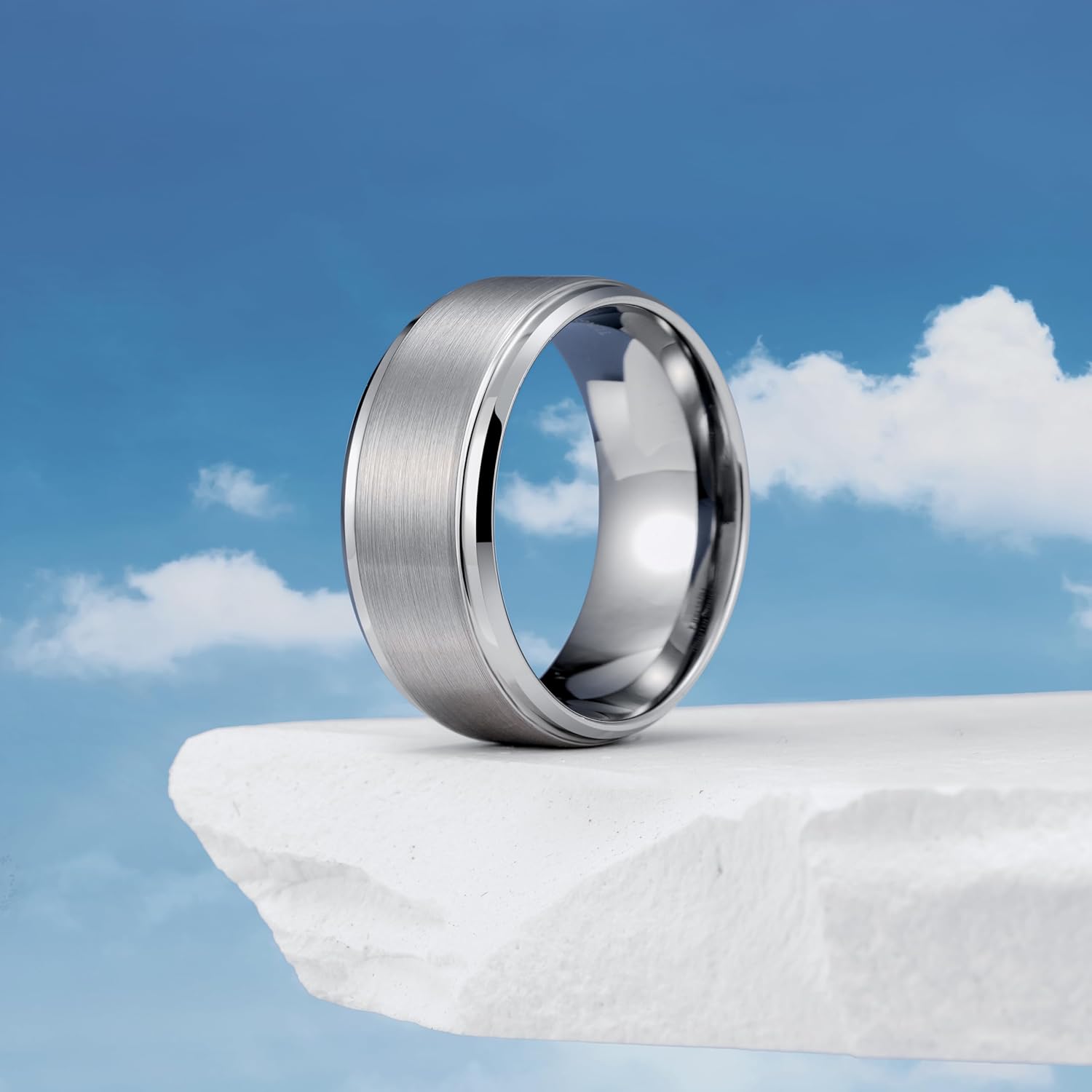
Check price on AmazonStainless steel bands in the $15–$150 range offer meaningful scratch resistance compared to gold, but they sit at only 200–400 HV on the Vickers scale — less than one-fifth the hardness of tungsten carbide. A stainless steel band worn daily through manual labor will show surface scuffing within months. An entry-level tungsten carbide band in the same price window will look nearly unchanged at the same point.
The trade-off at this tier is straightforward: if your budget is under $100 and you want the longest-lasting finish, entry-level tungsten carbide wins on scratch resistance. Neither stainless steel nor tungsten carbide can be resized, so neither option solves that problem. If flexibility matters most at this price point, cobalt chrome — discussed in the next section — is worth considering.
Key question to ask before buying at this tier: what is the binder composition? Cobalt-binder tungsten carbide, common in very low-cost bands, can cause skin reactions and surface staining over time. Nickel-binder tungsten carbide is the preferable choice even at budget price points, and any reputable retailer should be able to confirm this detail in writing.
King
$21.49
In stock on Amazon
Check price on AmazonMid-Tier: Cobalt Chrome vs. Mid-Range Tungsten Carbide
King
$28.99
In stock on Amazon
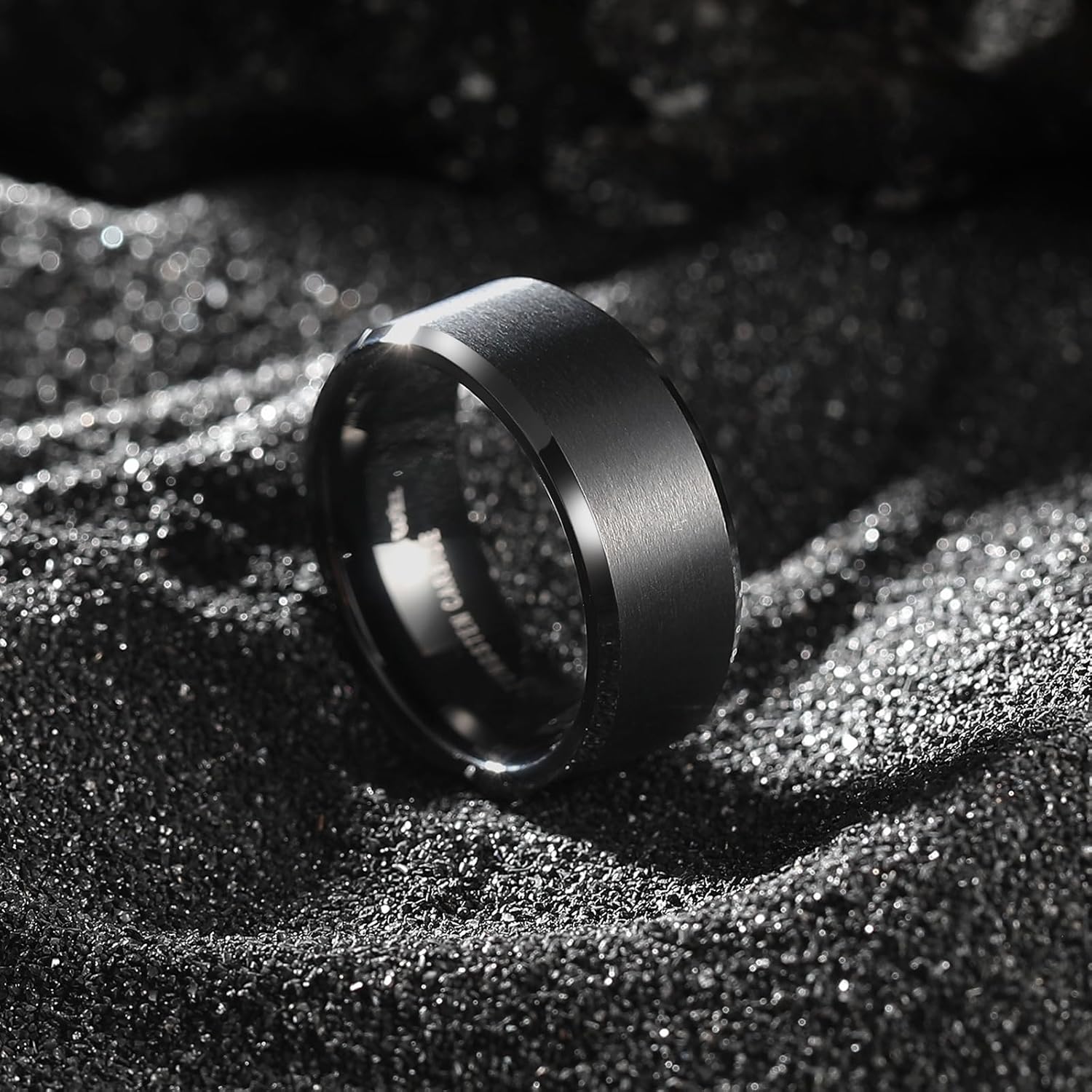
Check price on AmazonCobalt chrome occupies an interesting middle position. At 700–900 HV, it is meaningfully harder than stainless steel and significantly more scratch-resistant, while remaining tough rather than brittle — meaning it deforms under impact rather than fracturing. For buyers whose hands face sharp, concentrated impacts (mechanical work, demolition, hand-tool trades), cobalt chrome is the more forgiving choice in this price band.
Mid-range tungsten carbide bands in the $80–$200 range from established brands such as Triton or Benchmark’s tungsten lines offer a step up in finish longevity over cobalt chrome, but you are accepting the brittleness trade-off to get it. The Knot’s Wedding Band Metals Guide explicitly identifies brittleness as the primary risk factor for tungsten carbide buyers in manual trades and construction — a characterization consistent with the material science of crystalline composites.
At this tier, the decision rule comes down to impact profile: sustained abrasion favors tungsten carbide; sharp point-load impacts favor cobalt chrome.
King
$28.99
In stock on Amazon
Check price on AmazonPremium Tier: Platinum and Gold vs. Tungsten Carbide as a Heirloom Alternative
King
$28.99
In stock on Amazon
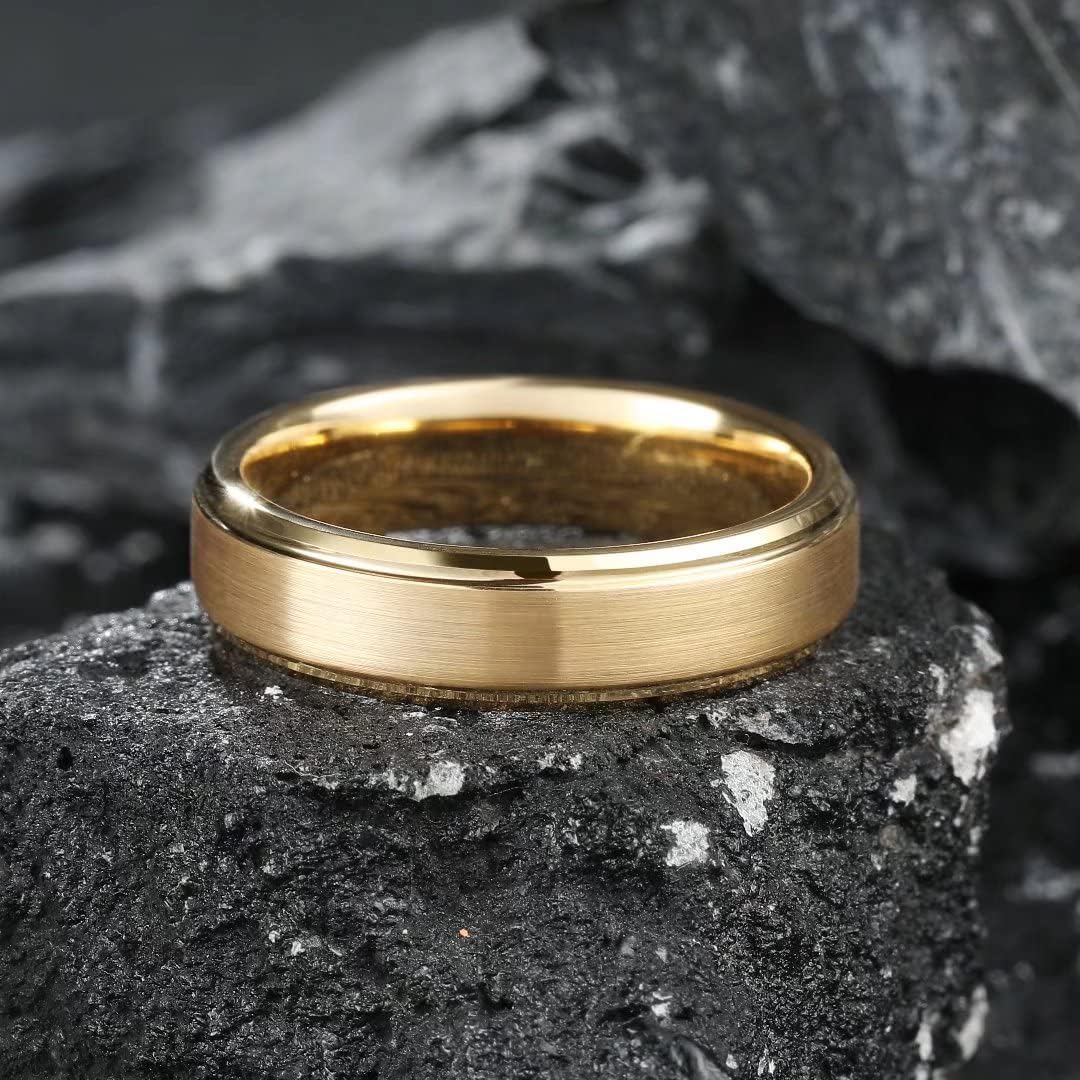
Check price on AmazonPlatinum and 14k gold sit at the top of the traditional wedding band market, with platinum ranging from $900 to $3,000+ and gold from $300 to $2,000+. Both are resizable, both carry meaningful resale value, and both develop a patina over time that many buyers consider part of the character of a long-worn ring.
Tungsten carbide does none of those things. It cannot be resized, carries near-zero resale value, and does not patina — it simply stays looking new, or it fractures.
The case for choosing a nickel-binder tungsten carbide band at the $150–$400 range over a platinum band is almost entirely pragmatic: for buyers who are hard on their hands and do not place sentimental value on a ring that ages with them, tungsten carbide delivers superior finish retention at a fraction of the cost. National Jeweler, in their published coverage Alternative Metal Band Market Trends, identifies this cost-to-durability ratio as the primary driver of tungsten carbide’s continued market share growth, particularly among first-time band buyers and buyers replacing lost or damaged rings.
The case against: platinum is a generational heirloom in a way tungsten carbide never will be. If the ring is meant to be passed down, platinum’s resizability and resale value matter. Tungsten carbide is a ring for the wearer, not an asset for the estate.
King
$28.99
In stock on Amazon
Check price on AmazonThe Brittleness Problem: Understanding the Real Failure Mode
Here is where the decision gets serious, and where too many buyers get blindsided.
The crystalline structure that gives tungsten carbide its hardness is also what makes it brittle. In materials science, brittleness means a material fractures under stress rather than deforming. Think of the difference between bending a soft metal rod versus snapping a piece of chalk. Tungsten carbide behaves much more like chalk than like a gold ring when force is sharp and concentrated.
In real life: owners who have dropped tungsten carbide bands on hard tile floors have reported chips at impact points. Rings caught between heavy machinery or a car door have been documented to fracture cleanly rather than deforming around the finger. The Knot’s Wedding Band Metals Guide calls out brittleness explicitly as the primary risk factor for tungsten carbide buyers who work in manual trades or construction.
The counterpoint — and it matters — is that under normal daily wear, the brittleness risk is genuinely low. Tungsten carbide is not going to crack because you knock your hand against a desk. The failure mode requires a specific type of force: high impact, concentrated at a point, on an unyielding surface. That is a narrower scenario than many buyers imagine.
There is also a medical consideration worth naming clearly: in a ring-avulsion injury or other finger emergency, emergency responders need to remove the ring quickly. Gold and platinum can be cut with standard ring cutters. Tungsten carbide cannot — it must be cracked off using vice grips or a specialized ring-cracking tool. Emergency room physicians are trained for this, and it is a solvable problem, but buyers who wear their rings during high-risk physical activities should know this before purchasing. Jewelers Mutual, in their published guidance document Ring Metals and Jewelry Insurance Considerations, recommends discussing ring removal protocols with an ER or urgent care provider if you work in a high-risk physical environment.
Binder Composition: Why “Tungsten Carbide” Is Not One Thing
Tungsten carbide as a material is always a composite — the tungsten carbide particles are bound together with a binder metal, and the binder choice affects both durability and skin compatibility.
Cobalt-binder tungsten carbide is older and more common in lower-cost bands. Cobalt binders can cause skin reactions in sensitive buyers, and over time, cobalt binders can oxidize, causing the ring to develop dark staining that is difficult to remove.
Nickel-binder tungsten carbide is the industry standard for jewelry-grade rings. Nickel binder is more stable, more corrosion-resistant, and less prone to skin reactions than cobalt — though buyers with documented nickel allergies should still approach with caution and request binder-specific documentation from the retailer before purchasing.
JCK Online’s retailer education piece Tungsten Carbide: What Retailers Need to Know emphasizes that asking “what is the binder?” is one of the most important questions a buyer can put to a retailer, and that reputable sellers should be able to answer it without hesitation. If a retailer cannot or will not disclose binder composition, treat that as a meaningful red flag.
Warranty and Exchange Reality Check
Alternative metal warranties are genuinely fragmented. Because tungsten carbide is inexpensive to produce at scale, many retailers offer lifetime warranties covering manufacturer defects — but notably not fractures from impact, which they classify as damage rather than defects.
The practical implication: a crack in your tungsten carbide band is unlikely to be covered under a standard warranty. Jewelers Mutual’s published guidance Ring Metals and Jewelry Insurance Considerations recommends adding a rider specifically for alternative metal bands if brittleness is a concern, since standard jewelry floater policies vary significantly in how they define accidental breakage.
National Jeweler’s coverage Alternative Metal Band Market Trends notes that non-resizability is the single most common post-purchase regret reported by tungsten carbide buyers. Before buying, confirm in writing: Does the retailer offer a sizing exchange if your ring size changes? What is the exchange window? Is a fractured ring eligible for any replacement discount? Reputable sellers answer these questions in their product documentation. If a policy exists only as a verbal assurance, ask to have it included on the receipt.
The Decision Rule
If you want a ring that looks perfect longer than any other metal in its price range, you are not planning major weight changes, and your hands face abrasion more than sharp impact: tungsten carbide is your answer. Choose nickel-binder construction, buy from a brand with a documented exchange policy, and size up slightly if you are between sizes — tungsten comfort-fit bands run slightly snug for some wearers, a pattern noted consistently across major retail platforms.
If your hands regularly face concentrated point-load impacts, you expect to resize in the next decade, or you have a nickel or cobalt sensitivity and cannot get clear binder documentation: choose cobalt chrome or titanium instead. You will give up some scratch resistance. You will gain flexibility — literally and practically.
Tungsten carbide is not a compromise metal. It is a specialist tool. Know what problem you are solving, confirm the binder, read the exchange policy, and it becomes one of the best buys in the alternative metals category.