June 2, 2026 • Mara Voss • 9 min reading time • Prices verified June 5, 2026
Coordinated Wedding Band Sets That Reject the His-and-Hers Default
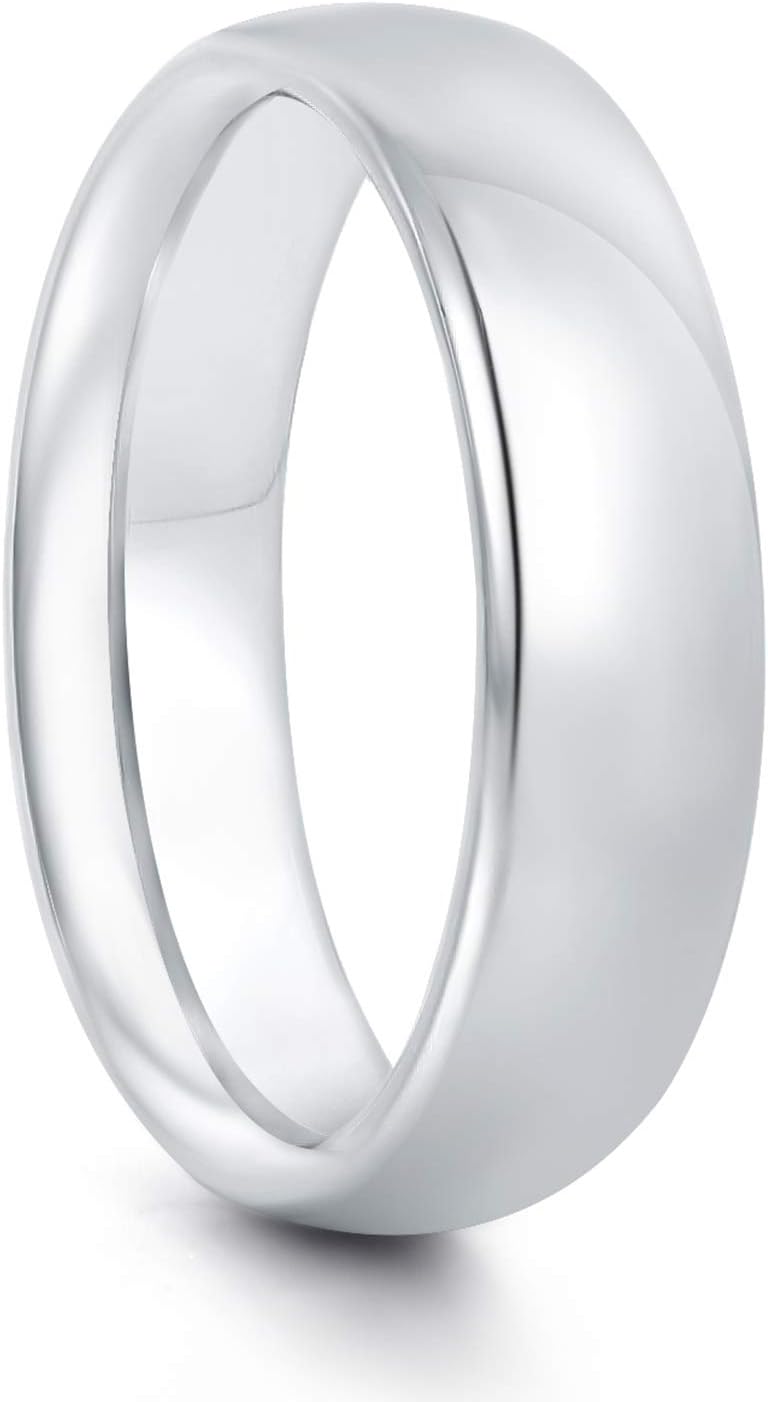
Most wedding band displays at a jewelry counter are still organized the same way they have been for decades: a tray for “men’s” rings on the left, “women’s” rings on the right — wider versus narrower, matte versus sparkle, done. If you’re a couple that doesn’t fit that template — same-sex partners, non-binary individuals, couples where both partners want a bold 8mm band, or partners who simply want something that visually belongs together without one ring being a shrunken version of the other — that default layout is actively unhelpful. This article is a practical guide to finding coordinated wedding band sets in alternative metals (steel, tungsten carbide, cobalt chrome, Damascus, and similar materials) that were designed to match across any two wearers, regardless of gender. We’ll walk through how “coordinated” actually works in metal jewelry, what the real design variables are, and how to make a decision that holds up after the wedding.
| EDITOR'S PICK[TRUMIUM 2mm 4mm 6mm 8mm Tungste…](https://www.amazon.com/dp/B07NW9HKCQ?tag=greenflower20-20) | Mid-tier[Greenpod 2mm 4mm 6mm Tungsten W…](https://www.amazon.com/dp/B07SBTWH63?tag=greenflower20-20) | Budget pick[KAZITSAN 2mm 4mm 6mm Stainless…](https://www.amazon.com/dp/B0917LY81B?tag=greenflower20-20) | |
|---|---|---|---|
| Material | Tungsten | Tungsten | Stainless Steel |
| Width options | 2/4/6/8mm | 2/4/6mm | 2/4/6mm |
| Color options | Silver/Rose Gold/Rainbow/Gold | Rose Gold/Silver/24K Gold/Black | Silver/Gold/Rose Gold |
| Profile | Domed | — | Dome |
| Finish | High Polish | Polished | High Polish |
| Price | $23.99 | $17.09 | $9.99 |
| See on Amazon → | See on Amazon → | See on Amazon → |
What “Coordinated” Actually Means in Alternative Metal Bands
Before you can shop intelligently, you need to be clear about what you’re actually matching. Coordinated sets in alternative metals typically work across three design axes:
Finish and texture. This is the most immediate visual link between two bands. If one partner wears a brushed (matte) finish and the other wears a high-polish mirror finish, the rings read as unrelated even if they’re the same metal and width. The most cohesive sets share the same finish or use a deliberate contrast (e.g., brushed center with polished bevels) applied identically to both bands.
Profile and width. Width is where the gendered-sizing assumption does its damage. Historically, retailers assume women want 4–5mm and men want 7–8mm. But width is a fit preference, not a gender prescription — it depends on hand size, knuckle-to-palm ratio, and personal taste. Coordinated sets that reject the binary default let both partners select their own width within the same design language. Some specialty retailers like Lashbrook and Benchmark offer the same band style across a 4mm–8mm range, so both partners can wear genuinely identical rings at different widths.
Material and pattern continuity. In specialty materials — Damascus steel (a patterned metal made by layering and folding different steel alloys to create flowing grain patterns, similar to how wood grain is formed), meteorite inlay (a slice of actual iron-nickel meteorite set into the band), and carbon fiber weave — “matching” means using the same material source or the same pattern designation. Damascus, in particular, presents a challenge: because the pattern is created organically through the forging process, no two Damascus rings are exactly alike. Per Lashbrook’s published collection notes, they offer named Damascus pattern lines (such as “Odin” and “Thor” pattern categories) that provide visual family resemblance even if the exact swirl differs between two bands.
The Decision Frame: Four Coordinated-Set Configurations
Most couples land in one of four configurations. Knowing which one you’re in narrows your retailer and material options quickly.
1. Identical Design, Different Widths
This is the cleanest solution for couples who want unmistakably matching rings. Both partners choose the same metal, same finish, same profile (the cross-sectional shape of the ring — flat, domed, beveled), and the same any inlay or accent. The only variable is width.
Best metals for this approach: Tungsten carbide and cobalt chrome. Both are available from Triton and Benchmark in consistent colorways and finishes across a 4mm–10mm width range, which means a 4mm and an 8mm band in the same style will be visually indistinguishable except in width. Tungsten carbide is rated at approximately 1500 on the Vickers hardness scale (a standard engineering measurement of how resistant a material is to permanent deformation — the higher the number, the harder), per GIA’s published overview of jewelry metals, making it extremely scratch-resistant. The trade-off: tungsten is brittle under sharp lateral force and can crack rather than bend. If you or your partner works in a trade where a ring can get caught or compressed, that’s relevant.
Price reality check:
| Metal | Matching set (4mm + 8mm) | Source range |
|---|---|---|
| Stainless steel | $25–$60 total | Budget/online retailers |
| Tungsten carbide | $80–$200 total | Triton, Benchmark, Amazon |
| Cobalt chrome | $150–$350 total | Benchmark, Lashbrook |
| Damascus steel | $400–$900+ total | Lashbrook, specialty jewelers |
Prices reflect May 2026 retail; Damascus prices vary significantly by artisan.
2. Same Material, Different Profiles
This works well when both partners want distinct silhouettes — one prefers a flat, architectural look, the other prefers a domed comfort-fit (a band with a rounded interior that sits slightly raised from the finger for all-day comfort). The material tie is strong enough to read as a set. Damascus and meteorite inlay are particularly effective here because the material itself is the visual signature; the profile becomes a secondary detail.
Brides.com’s matching bands guide notes that couples increasingly use this approach to let each partner’s ring reflect their personal aesthetic while still reading as clearly related. The caveat: if the finishes diverge (one polished, one brushed), the visual connection weakens. Keeping the finish identical is the single highest-leverage decision you can make in this configuration.
3. Accent or Inlay Echo
Instead of matching the entire ring, both bands carry one shared element — a meteorite inlay, a wood inlay, a carbon fiber stripe — against different base metals. This is popular with couples where one partner wants a precious metal base (like a cobalt chrome with a polished look close to platinum) and the other wants a more industrial aesthetic, but both want a legible visual connection.
The practical complexity here is inlay durability. Carbon fiber inlays — actual woven carbon fiber set into a channel in the band — are extremely lightweight and visually striking, but reviewers across specialty jeweler forums consistently note that inlays in high-wear environments (trades, surgery, outdoor sports) can loosen over years. Lashbrook publicly documents a lifetime warranty on inlay integrity for their bands, which is the benchmark to compare against when evaluating other specialty makers.
4. Same Design Language, Different Materials
This is the most sophisticated configuration and requires the most jeweler collaboration. Both bands are designed by the same maker, follow the same proportional logic (similar width, same profile, matched bevels), but use different metals — for example, one partner in Damascus steel and the other in titanium with a matching brushed finish. The rings look like they belong to the same collection without being identical.
JCK Online’s 2025 alternative metals market coverage notes that custom and semi-custom commissions in this category have grown significantly among design-forward buyers, particularly at specialty makers who offer design consultation as part of the purchase process. This is the tier where budget moves above $300 per band and the conversation with your jeweler matters more than any spec sheet.
The Gendered-Sizing Problem (and How to Route Around It)
The deeper issue with most matching-set displays isn’t aesthetics — it’s that the sizing system defaults are gendered in ways that create real fit problems. “Women’s” rings are frequently manufactured in narrower widths and smaller finger sizes (size 4–7 in most retail display cases), while “men’s” bands start at size 8. Couples where both partners wear sizes 7–9, or where one partner wears a 12, frequently fall outside the standard set inventory.
The practical routing: build-to-order or semi-custom. Lashbrook, Benchmark, and Brilliant Earth all offer made-to-order sizing in their alternative metal lines, which means both rings are built to exact finger measurements rather than sized down from stock. National Jeweler’s reporting on the alternative metal category through 2025 consistently identified custom sizing as a primary driver of consumer satisfaction in this segment — buyers who received rings sized to measurement reported significantly fewer comfort and fit complaints than buyers who sized from display stock.
If both partners wear larger sizes (10+): Confirm sizing availability before designing. Tungsten and cobalt chrome can be manufactured in large sizes, but they cannot be resized after manufacture (unlike gold, which a jeweler can cut and solder). Most tungsten retailers offer a one-time exchange for size within the first year — verify this policy before purchase.
The “If X, Then Y” Decision Rules
This is the part to screenshot if you’re mid-decision:
If you want the cleanest visual match and have a mid-range budget ($150–$350 total): Go tungsten carbide, identical design, different widths. Triton and Benchmark both offer this. Verify the exchange policy covers size swaps — neither metal can be resized.
If one or both partners is in a high-contact occupation (trade, surgery, outdoor sport): Cobalt chrome over tungsten. Cobalt chrome bends under extreme force rather than shattering, which is the critical difference for active-lifestyle wearers. GIA’s published metal hardness overview confirms cobalt chrome’s Vickers hardness sits around 700–900 — harder than steel, but not brittle like tungsten.
If you’re investing $400+ and want a one-of-a-kind set: Commission Damascus or meteorite inlay from a single maker (Lashbrook is the most frequently cited specialty source in this category). Use the same pattern family and finish. Accept that the two rings will be visually related, not identical — that’s the nature of handcrafted pattern metals, and it’s a feature, not a defect.
If the default “his and hers” sizing doesn’t fit your situation: Build-to-order. Do not try to fit into display stock if it doesn’t work. The extra 2–4 week wait is worth it.
If budget is under $80 for both rings: Stainless steel sets are legitimate. They scratch more easily than tungsten (stainless steel sits at approximately 150–200 Vickers hardness), but they’re hypoallergenic (specifically, nickel-free 316L surgical-grade steel), bendable in an emergency, and available in coordinated styles from multiple online retailers. The Knot’s 2025 Real Weddings Study reported that budget-conscious couples increasingly cite alternative metal sets under $100 as their final choice — not as a compromise, but as a deliberate decision based on durability-to-cost ratio.
The his-and-hers default exists because it was easy to stock and easy to sell. It was never actually necessary. The material and design options available in 2026 from specialty and mid-market makers are broad enough that any two people can find a coordinated set that fits how they actually live — and what they actually look like together.